Back to Blog
#Khatwa7 min read

How Accurate Are AI Food Scanner Apps in 2026? The Honest Truth

How Accurate Are AI Food Scanner Apps in 2026? The Honest Truth

The promise is almost too good to be true: point your phone at a plate of food, and an AI instantly tells you exactly how many calories, grams of protein, carbs, and fat you are about to eat. In 2026, dozens of apps offer this feature. But the question that matters most is one that most marketing pages conveniently avoid: How accurate are these AI food scanners, really?

The honest answer is nuanced. And understanding that nuance is the difference between using AI food tracking as a powerful tool versus dismissing it as a gimmick—or worse, trusting it blindly.

What the Research Actually Says

Multiple peer-reviewed studies from 2024-2026 have benchmarked AI food recognition models against gold-standard nutritional databases (like USDA FoodData Central). Here is what they consistently find:

  • Simple, single-ingredient foods: AI achieves 90-97% accuracy. Think a banana, a grilled chicken breast, a bowl of rice. These are well-represented in training data, and portion estimation is relatively straightforward.
  • Multi-component meals: Accuracy drops to 75-85%. A plate of pasta with meat sauce, vegetables, and cheese presents challenges because the AI must segment, identify, and estimate portions of each component independently.
  • Complex cultural dishes: This is where most apps struggle significantly. A plate of mansaf, mandi, or mulukhiyah may not exist in a Western-trained model's dataset at all. Error rates here can reach 30-40% on apps that lack regional food databases.

The Factors That Make or Break Accuracy

1. Database Quality Matters More Than AI Sophistication

The most advanced neural network in the world is useless if the nutritional database it references is wrong. Many popular apps rely on crowdsourced food databases where the same dish can have wildly different calorie values depending on who entered it. One user's "chicken shawarma" might be logged as 350 calories; another's as 650. Both entries exist in the database, and the AI has no way to know which is correct.

Apps that use professionally verified, curated databases—especially those that include regional foods—will always outperform crowdsourced alternatives in real-world accuracy.

2. Photo Quality and Conditions

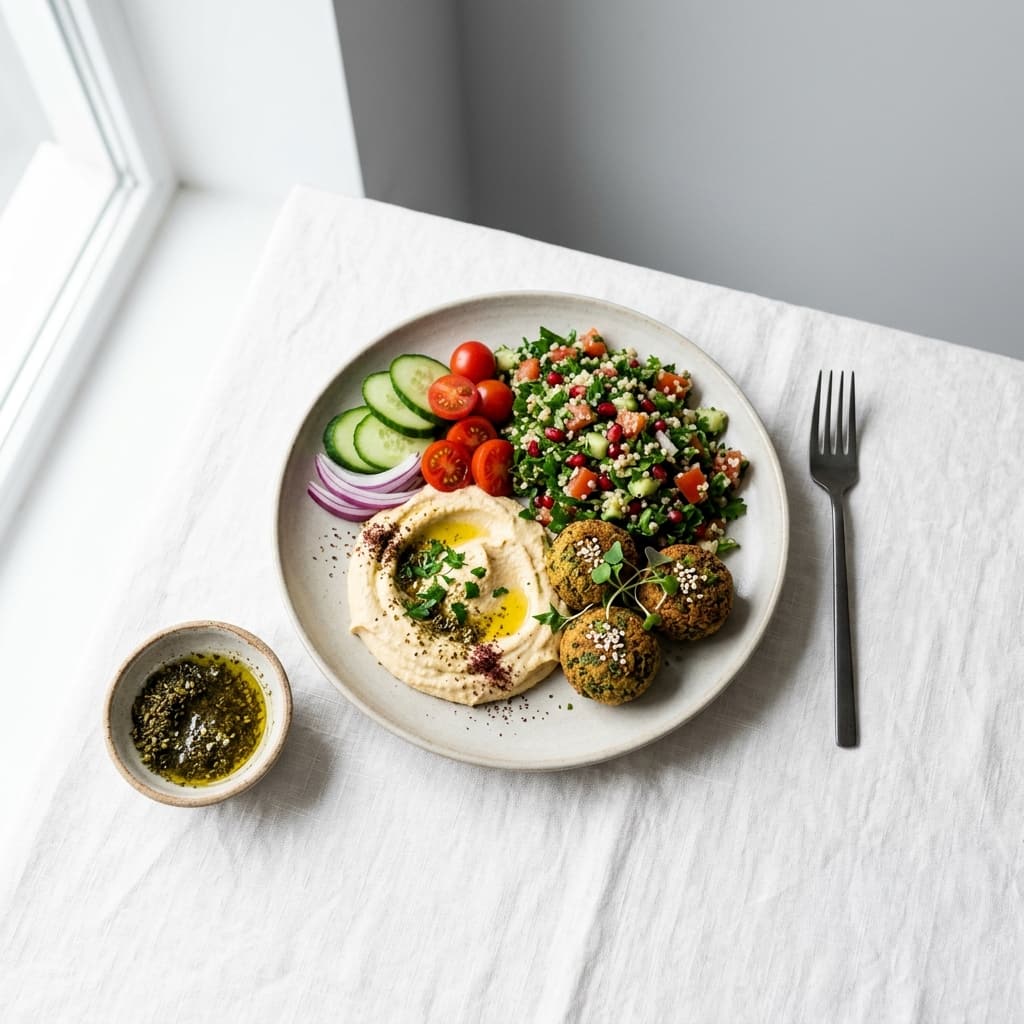
Lighting, angle, plate color, and food arrangement all affect recognition accuracy. A well-lit, top-down photo of food on a white plate will produce significantly better results than a dim, angled shot of a mixed dish on a dark surface. Most apps do not communicate this to users, leading to frustration when results feel inconsistent.

3. Portion Estimation Is the Hardest Problem

Even if the AI perfectly identifies that you are eating rice and grilled chicken, estimating the weight of each component from a 2D photograph is extraordinarily difficult. Depth perception, plate size, and food density all introduce error. This is why the best apps allow you to easily adjust portions after the initial AI scan—turning a good estimate into a precise one with a single tap.

Why Consistency Beats Perfection

Here is the insight that changes everything: for the vast majority of health and fitness goals, consistency of tracking matters far more than absolute accuracy.

A landmark 2023 study in the International Journal of Obesity found that participants who tracked their meals daily—even with estimates that were off by 15-20%—lost significantly more weight over 6 months than those who tracked sporadically but with higher precision. The reason? Daily tracking creates awareness. Awareness creates better decisions. Better decisions, compounded over months, create transformation.

If an AI food scanner makes you 3x more likely to log every meal because it takes 5 seconds instead of 3 minutes, that convenience advantage will dramatically outweigh any accuracy gap.

How Khatwa Maximizes Real-World Accuracy

Khatwa approaches AI food scanning with a philosophy of informed accuracy rather than false precision:

  • 60+ Verified Regional Dishes: Unlike apps that rely solely on Western food databases, Khatwa includes a manually verified library of Middle Eastern and Arabic dishes. When you scan a plate of fattoush or kabsa, the nutritional data comes from verified sources—not random user entries.
  • Easy Portion Adjustment: After the AI scan, you can quickly adjust portion sizes with intuitive controls. The AI gives you a strong starting point; you refine it in seconds.
  • AI Coach Cross-Validation: Khatwa's AI coach monitors your daily intake patterns and flags anomalies. If your lunch suddenly logs at 200 calories when you typically eat 600-800, it asks if you might want to double-check. This built-in sanity check catches errors that raw AI scanning would miss.

Track Smarter, Not Harder

AI food scanning is not perfect—and anyone who tells you otherwise is lying. But it does not need to be perfect. It needs to be fast, consistent, and smart enough to keep you on track. That is exactly what Khatwa delivers.

Try AI Food Scanning Free

The Bottom Line

AI food scanners in 2026 are remarkably good at what they do—especially for common, well-lit, single-component meals. They are less reliable for complex mixed dishes and culturally specific foods unless the app has invested in regional database quality. But the most important thing to remember is this: an imperfect tracker you use every day will always outperform a perfect tracker you abandon after a week. Speed, convenience, and consistency are the real game-changers.